- Posted By Admin
- Aug 06, 2026
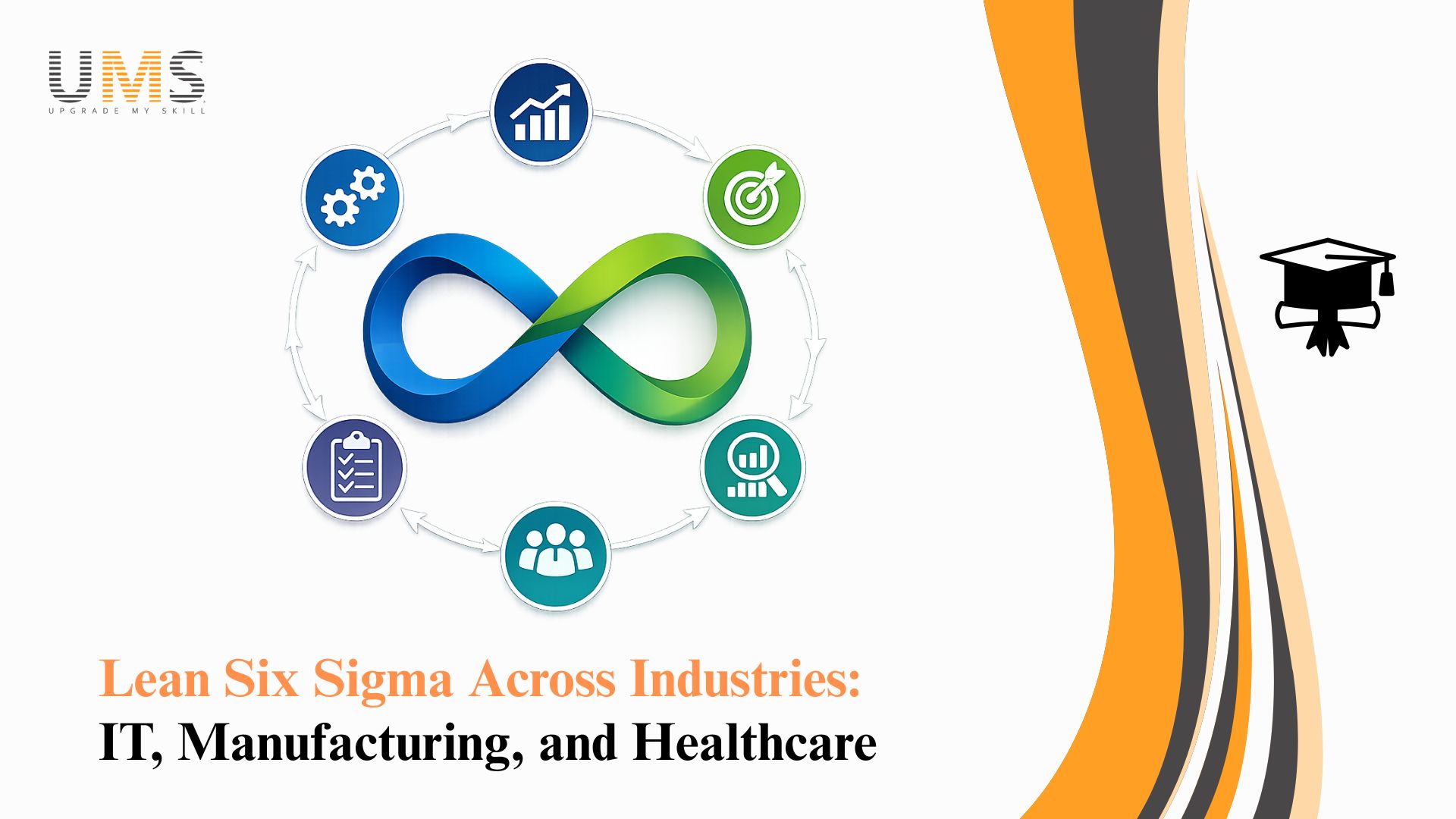
Introduction
In today’s hyper-competitive and rapidly evolving business landscape, organizations are constantly seeking ways to improve efficiency, reduce costs, and deliver superior value to customers. One methodology that has consistently proven its effectiveness across diverse sectors is Lean Six Sigma. By combining the waste-reduction principles of Lean with the data-driven precision of Six Sigma, this powerful approach enables organizations to achieve operational excellence and sustainable growth.
This article explores how Lean Six Sigma is transforming IT, manufacturing, and healthcare industries, and why professionals across these sectors are increasingly adopting it as a core competency.
Lean Six Sigma is a structured methodology focused on improving processes by eliminating waste, reducing variation, and enhancing quality. It relies on data-driven decision-making and follows the well-known DMAIC framework:
This framework is universally applicable, making Lean Six Sigma a valuable tool across industries.
The IT sector is characterized by rapid innovation, complex systems, and increasing customer expectations. Lean Six Sigma helps IT organizations streamline operations and improve service delivery.
Key Benefits in IT:
Real-World Applications:
By integrating Lean Six Sigma, IT teams can move from reactive problem-solving to proactive process improvement.
Manufacturing is where Lean Six Sigma first gained global recognition—and it continues to be a cornerstone of operational excellence in this sector.
Key Benefits in Manufacturing:
Real-World Applications:
Manufacturers leveraging Lean Six Sigma often gain a significant competitive edge through improved efficiency and reduced operational costs.
Healthcare organizations face increasing pressure to improve patient outcomes while managing costs and operational complexity. Lean Six Sigma offers a structured approach to address these challenges.
Key Benefits in Healthcare:
Real-World Applications:
By adopting Lean Six Sigma, healthcare providers can deliver better patient experiences while maintaining efficiency.
Despite differences in operations, IT, manufacturing, and healthcare share common challenges:
Lean Six Sigma addresses these challenges by providing:
This cross-industry adaptability is what makes Lean Six Sigma a critical skill for modern professionals.
Professionals equipped with Lean Six Sigma certifications are highly valued across industries. These certifications demonstrate expertise in process improvement and leadership.
Key Advantages:
Certifications are typically categorized into different levels:
If you're looking to build a successful career in process improvement and operational excellence, investing in Lean Six Sigma certification is a strategic move.
At Upgrade My Skill, we offer comprehensive, industry-relevant training programs designed to help you master Lean Six Sigma concepts and apply them effectively in real-world scenarios:
Why Choose Our Training?
Lean Six Sigma is no longer limited to manufacturing—it has become a universal methodology driving efficiency, quality, and innovation across IT, healthcare, and beyond. As organizations continue to prioritize operational excellence, the demand for Lean Six Sigma professionals will only grow.
Whether you're an IT professional, a manufacturing expert, or a healthcare practitioner, mastering Lean Six Sigma can unlock new opportunities and position you as a leader in your field.
Start your Lean Six Sigma journey today and become a catalyst for transformation in your industry.
In 2026, enterprise IT environments have become more complex than ever. Organizations are embracing hybrid multi-cloud strate...
This article provides a comprehensive overview of SIAM (Service Integration and Management) and its growing importance in man...
This article explores how Lean Six Sigma drives operational excellence across IT, manufacturing, and healthcare by improving...