- Posted By Admin
- Aug 06, 2026
In 2026, enterprise IT environments have become more complex than ever. Organizations are embracing hybrid multi-cloud strategies, AI-powered applications, SaaS platforms, and specialized third-party service providers to accelerate digital transformation. While these advancements improve agility and innovation, they also introduce challenges such as fragmented vendor management, operational inefficiencies, and governance issues.
To address these challenges, organizations are increasingly adopting the Service Integration and Management (SIAM) framework. Earning a SIAM Foundation Certification Training equips IT professionals with the skills needed to coordinate multiple service providers, improve governance, and deliver seamless business services. This article explores the biggest IT challenges in 2026 and how SIAM Foundation Certification helps professionals stay ahead.
Modern enterprises no longer rely on a single IT provider or on-premises infrastructure. Instead, they operate across hybrid cloud environments, multiple SaaS platforms, AI-driven systems, and specialized vendors.
Organizations today depend on:
This evolving ecosystem requires professionals who can integrate, govern, and manage services across multiple suppliers, making SIAM expertise more valuable than ever.
As digital ecosystems become increasingly interconnected, organizations encounter several operational and governance challenges.
Enterprises often work with numerous cloud providers, software vendors, security partners, and managed service providers.
Without centralized coordination, managing multiple suppliers becomes increasingly difficult.
Organizations distribute workloads across public cloud, private cloud, and on-premises infrastructure.
Coordinating these environments requires standardized governance.
The widespread adoption of AI introduces governance and compliance concerns.
Organizations need structured governance frameworks to manage AI responsibly.
Modern cyber threats frequently target third-party suppliers and software supply chains.
Unified governance helps minimize enterprise-wide security risks.
Different vendors often use different tools, reporting systems, and operational processes.
This fragmentation makes enterprise-wide service management challenging.
Organizations must comply with global data privacy and industry regulations.
Managing compliance across multiple vendors requires structured governance.
Organizations increasingly seek professionals capable of managing multi-vendor service environments.
This growing skills gap has increased demand for SIAM-certified professionals.
Businesses require faster innovation while maintaining operational stability.
Traditional IT service management models struggle to support this pace.
Service Integration and Management (SIAM) is a governance framework that integrates multiple internal and external service providers into a unified service delivery model.
The SIAM ecosystem consists of three key layers:
Through SIAM Foundation Certification Training, professionals learn governance principles, supplier coordination, service integration, and the SIAM roadmap covering Discovery, Design, Transition, and Operate phases.
SIAM provides organizations with a structured framework to overcome modern IT complexity.
SIAM creates a collaborative supplier ecosystem with standardized governance.
SIAM aligns cloud services, infrastructure, and applications into a unified business service.
Organizations establish clear operational authority and standardized governance.
SIAM introduces unified processes across all service providers.
Service Integrators coordinate vendors during critical incidents.
SIAM ensures consistent governance across cloud platforms and AI-powered systems.
| Feature | Traditional ITSM / ITIL | SIAM Framework |
|---|---|---|
| Primary Focus | Internal IT processes | Multi-provider integration |
| Supplier Model | Individual vendors | Integrated supplier ecosystem |
| Accountability | Per vendor | Central Service Integrator |
| Processes | Vendor-specific | Standardized across providers |
| Incident Management | Isolated troubleshooting | Collaborative resolution |
| Business Value | SLA compliance | End-to-end business outcomes |
SIAM Foundation Certification prepares professionals for today's multi-supplier IT environments.
This certification is ideal for professionals involved in IT service management and digital transformation.
Professionals with SIAM certification can pursue several high-demand roles.
Organizations value SIAM-certified professionals because they improve governance, collaboration, and operational efficiency.
Upgrade My Skill offers industry-focused SIAM Foundation Certification Training designed to prepare professionals for today's enterprise IT challenges.
What Our Training Offers:
Our program provides practical knowledge and hands-on expertise to help professionals confidently manage complex multi-vendor IT environments.
Start your SIAM journey today:
SIAM Foundation Certification Training
The modern IT landscape demands professionals who can orchestrate services across multiple vendors while maintaining governance, security, and business value. SIAM Foundation Certification equips IT professionals with the knowledge and practical skills required to manage complex service ecosystems effectively.
As enterprises continue investing in hybrid cloud, AI, and digital transformation, SIAM-certified professionals will remain highly sought after. Investing in SIAM Foundation Certification today can significantly enhance your career prospects and prepare you for the future of enterprise IT management.
With the right training and expert guidance from Upgrade My Skill, you can confidently lead service integration initiatives and thrive in the evolving IT industry.
In 2026, enterprise IT environments have become more complex than ever. Organizations are embracing hybrid multi-cloud strate...
This article provides a comprehensive overview of SIAM (Service Integration and Management) and its growing importance in man...
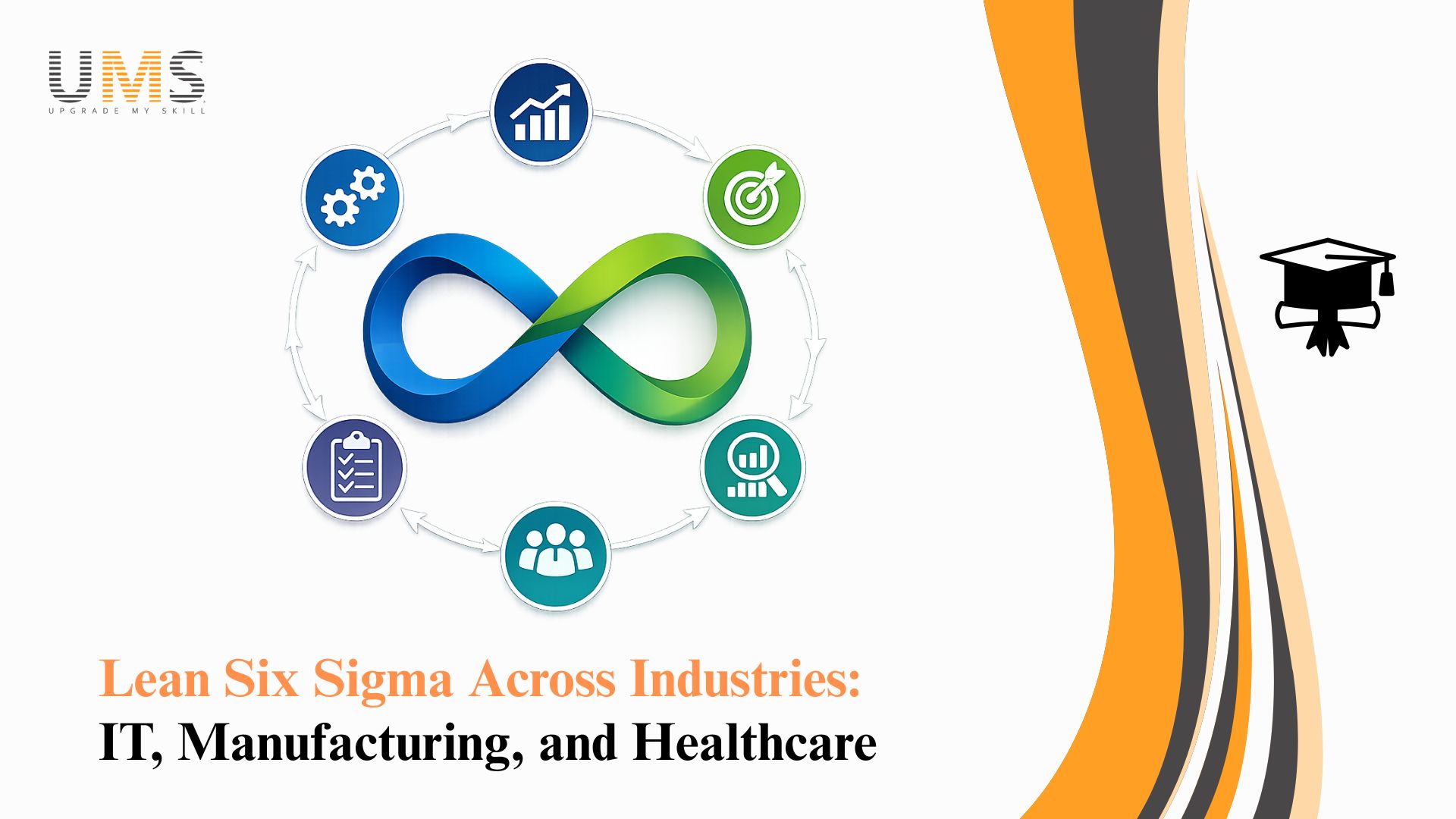
This article explores how Lean Six Sigma drives operational excellence across IT, manufacturing, and healthcare by improving...