- Posted By Admin
- Aug 06, 2026
Introduction
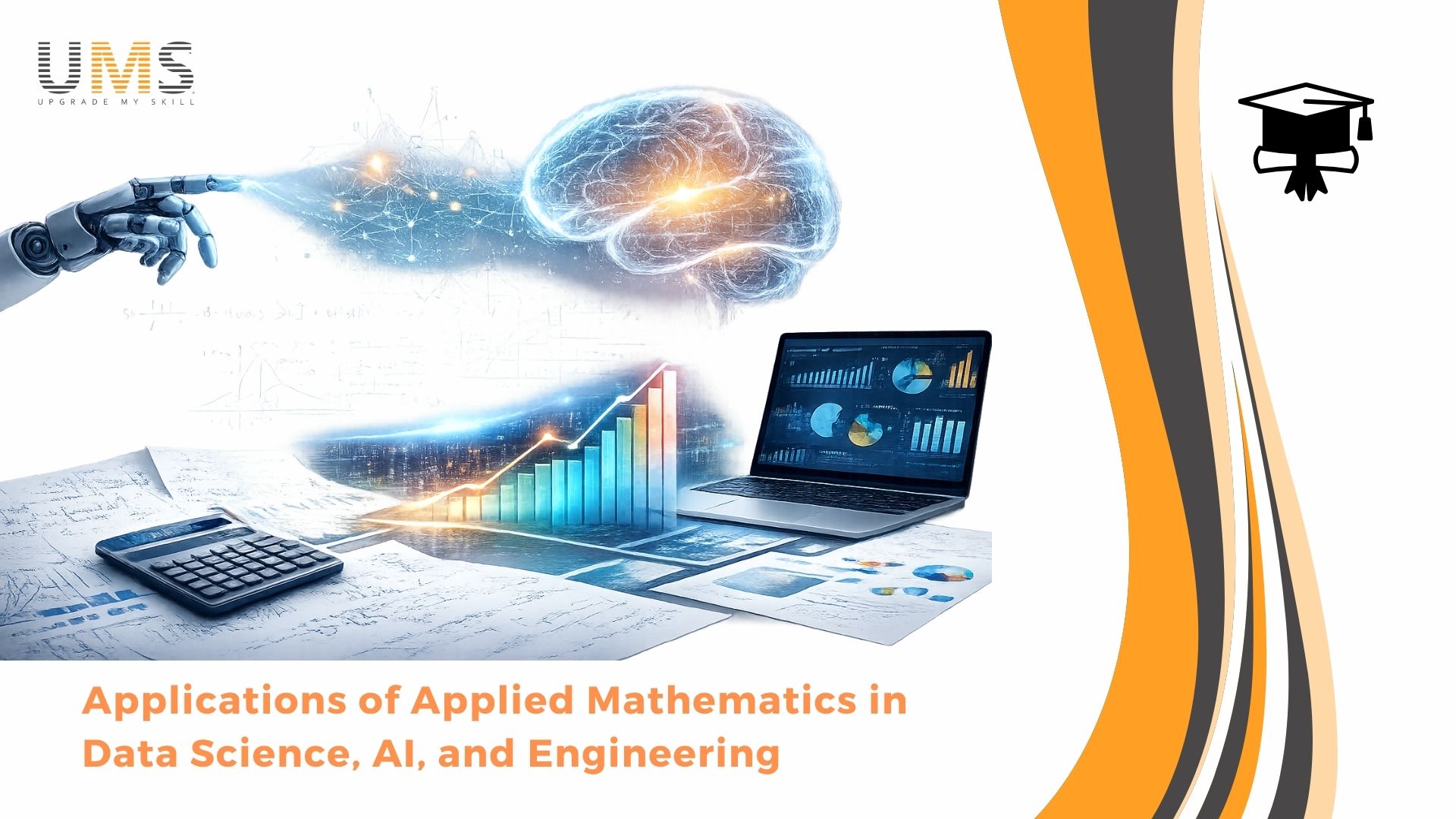
Applied mathematics plays a critical role in shaping the modern world. From powering intelligent algorithms to solving complex engineering challenges, it serves as the backbone of innovation across industries. In today’s data-driven era, fields like data science, artificial intelligence (AI), and engineering rely heavily on mathematical principles to analyse patterns, optimize systems, and make accurate predictions.
This article explores how applied mathematics is used in real-world scenarios, particularly in data science, AI, and engineering, and why mastering these concepts is essential for professionals aiming to thrive in technology-driven careers.
Applied mathematics involves using mathematical techniques, methods, and models to solve practical problems in science, engineering, business, and industry. Unlike pure mathematics, which focuses on abstract concepts, applied mathematics emphasizes real-world applications.
Key areas include:
These tools help transform raw data and complex systems into understandable and actionable insights.
Data science is one of the fastest-growing fields, and its foundation lies in applied mathematics. Every stage of the data science lifecycle—from data collection to decision-making—relies on mathematical principles.
Statistics is at the heart of data science. It helps in:
Concepts like regression analysis, hypothesis testing, and probability distributions are widely used.
Mathematical models help represent real-world phenomena. For example:
These models use equations and algorithms to simulate outcomes based on input data.
Optimization techniques are used to:
For example, companies use optimization to determine the best pricing strategies or supply chain routes.
Machine learning algorithms rely on:
Without applied mathematics, machine learning simply wouldn’t exist.
Artificial Intelligence is transforming industries such as healthcare, finance, retail, and transportation. Applied mathematics provides the framework that makes AI systems intelligent and efficient.
Neural networks are inspired by the human brain and rely heavily on:
These mathematical concepts allow machines to learn from data and improve over time.
NLP enables machines to understand human language. It uses:
Applications include chatbots, translation systems, and voice assistants.
Computer vision allows machines to interpret images and videos. Mathematics is used for:
Examples include facial recognition, medical imaging, and autonomous vehicles.
Reinforcement learning involves decision-making through rewards and penalties. It uses:
This is widely used in robotics, gaming, and automation.
Engineering disciplines rely extensively on applied mathematics to design, analyse, and optimize systems.
Mathematics helps engineers:
Differential equations and numerical methods are commonly used.
Applied mathematics is essential for:
Fourier transforms and linear algebra play a key role here.
Engineers use mathematics to:
Mathematics is used for:
Applied mathematics is a powerful tool that drives innovation across data science, artificial intelligence, and engineering. It transforms abstract concepts into practical solutions that impact industries and everyday life.
As technology continues to evolve, the demand for professionals who can combine mathematical expertise with practical implementation skills will only grow. By mastering applied mathematics and complementing it with industry-relevant certifications like SIAM, individuals can position themselves at the forefront of modern technological advancements.
If you’re looking to enhance your career in IT service management and work in complex, multi-provider environments, gaining expertise in SIAM can be a game-changer.
The SIAM Professional Certification Training equips you with:
In 2026, enterprise IT environments have become more complex than ever. Organizations are embracing hybrid multi-cloud strate...

This article provides a comprehensive overview of SIAM (Service Integration and Management) and its growing importance in man...
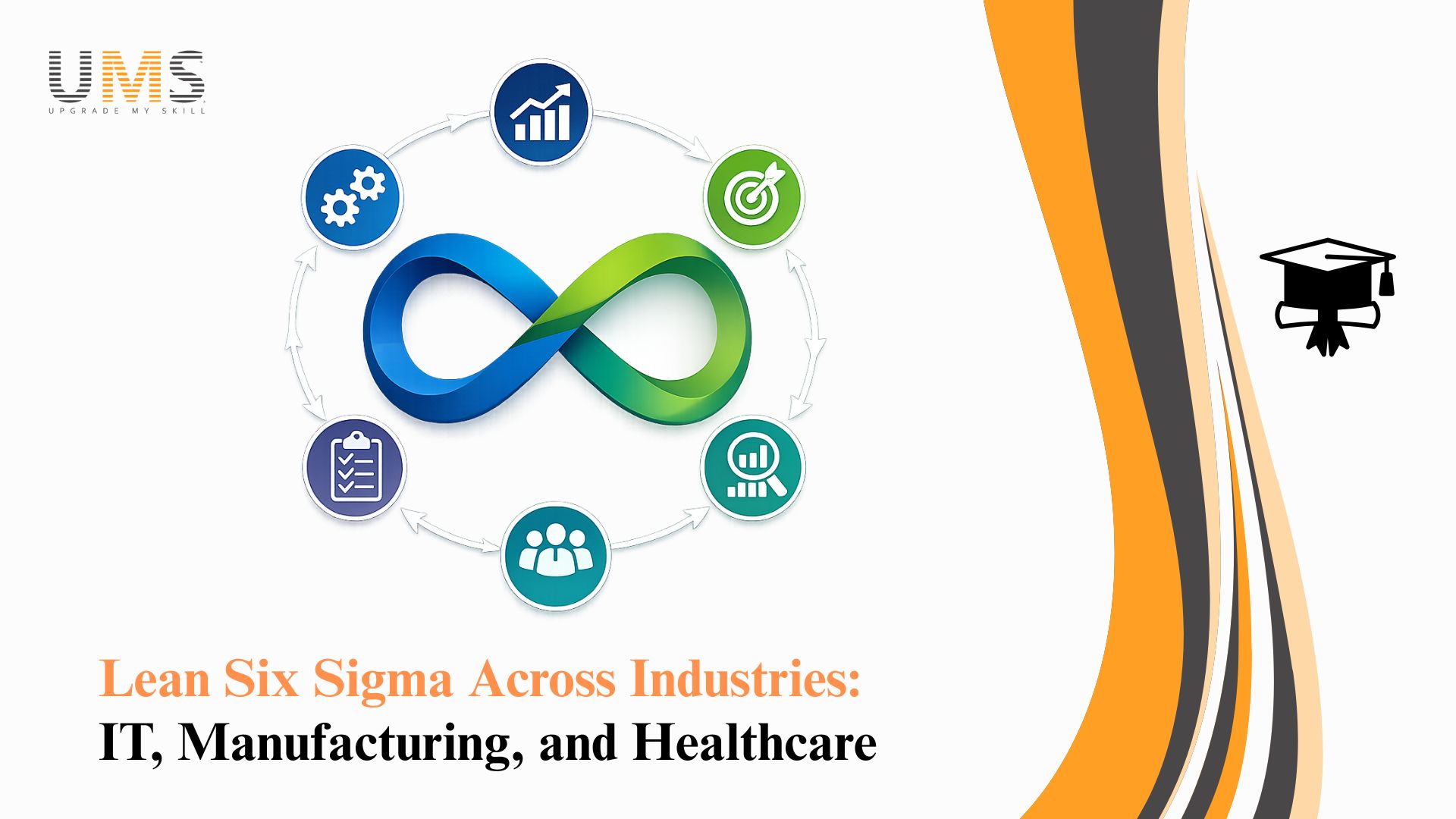
This article explores how Lean Six Sigma drives operational excellence across IT, manufacturing, and healthcare by improving...